Dinacharya is the Ayurvedic practice of aligning your daily habits with nature’s biological rhythms to boost health and energy.
How to use Ayurveda in daily life?
Dinacharya is the daily routine, one of the key concepts in Ayurvedic practices. It is the foundation on which our lives are built and that foundation is necessary to bring a positive change in body, mind and consciousness. Dinacharya helps to maintain optimal health by removing the wastes from the body that would otherwise clog the channels. Physical and mental purity, saucha, are prerequisites to conduct all other activities in life with success and in harmony with the environment.
The manifestation of most imbalances occur as a result of habituation to a diet and lifestyle that goes against the individual’s constitution. Ayurvedic practices can re-establish a balance in one’s altered state of imbalance and bring one back into a state of wellbeing and beyond in the form of Dinacharya, daily Ayurvedic practices.
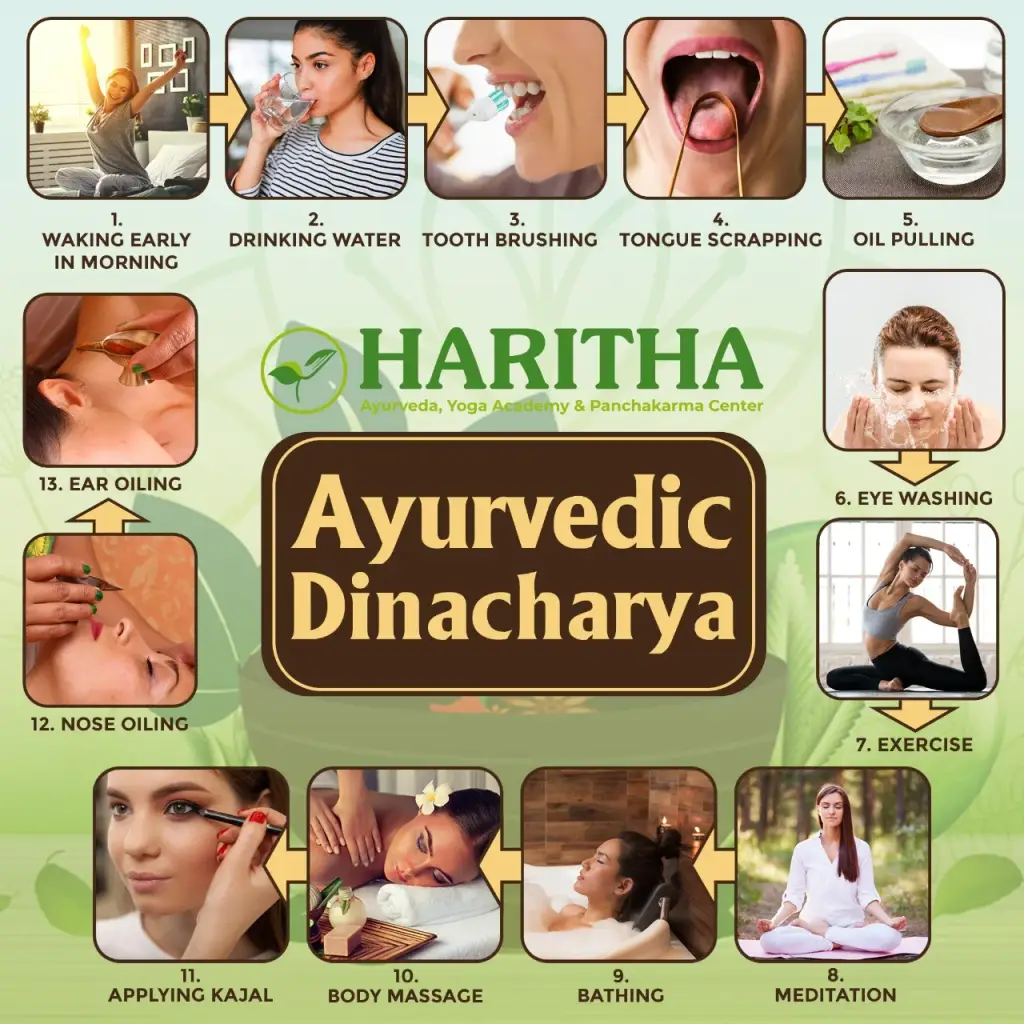
- Wake up just before sunrise to give the body a chance to harmonize with the rhythms of the day. This is the most satvic (pure, clear, light, spiritual) time of day and is the best time of day for meditation and yoga.
- Drink a cup of warm water with a squeeze of lemon first thing in the morning to awaken and cleanse the digestive tract and organs. Drinking ample water continuously throughout the day supports the brain in functioning optimally.
- Use a tongue scraper gently each morning to remove bacteria, stimulate your internal organs and improve your sense of taste.
- Splash the eyes with cool water upon waking to soothe and cool over worked eyes, which tend to store a great deal of heat.
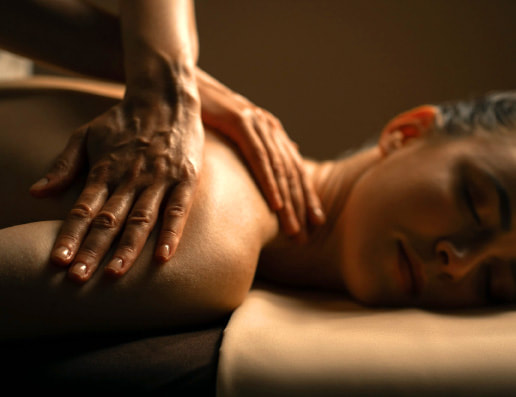
- Practice a daily warm oil massage, called abhyanga, to nurture your skin, release toxins and soothe the nervous system (see instructions for Abhyanga in next week’s post!)
- Create reliable, rhythmic, consistent meal times to support optimal health.
- Eat breakfast between 6-8am. Breakfast is “ breaking a fast” from the night before, and it should be a medium sized, nutrient rich meal like oatmeal, eggs or a green protein smoothie.
- Eat lunch between 11am-1pm. Lunch should be your largest meal of the day and should be eaten when the sun is highest and strongest in the sky, as this is when your own inner sun, your digestive juices, are at their peak strength.
- Eat Supper between 5-7pm. Supper should be your smallest meal of the day. The word supper comes from the word ““supplement” and it should be something small enough to digest before you go to sleep. Ideally eating dinner 2-3 hours before bedtime. If the body is not busy digesting a big meal while you are sleeping, it can use all of its good energy to work on removing toxins and healing your brain.
- Try to get to sleep before10pm, as this promotes the deepest sleep and guarantees that you’ll have adequate rest if you are to awaken with the sunrise.
- Practice meditation, yoga and pranayama each day.
After exercise, sit quietly and do some deep breathing exercises.
- For vāta: calming breaths like anuloma viloma – alternate nostril breathing.
- For pitta: cooling breaths like sheetali or sheetkari
- For kapha: heating breaths like bhastrika – bellows breath or kapalabhati – shining skull breath.
How to stay healthy according to Ayurveda?
The Ayurvedic daily practices of Dinacharya, are related to biological time, which is connected to hunger, thirst, sleep, cardiac rhythm, rate of respiration, secretion of particular neurotransmitters, hormones and digestive enzymes at certain times of the day. This daily biological clock is regulated by the hypothalamic area of the brain governing our circadian rhythm and it accounts for variations in our physiological and psychological behavior. The hypothalamus regularizes the personal body clock and aids digestion and metabolism. Building an appropriate daily routine allows one to live in harmony with the cycles of nature which brings self-esteem, peace, and longevity.
Ayurveda is one of the sciences that gives great emphasis to Dinacharya, which needs to be customized according to the individual’s needs and is based on the person’s basic constitution as well as the present altered state of that constitution,the age, strength, the season and stress load.